


Ever wondered where “helping with daily life” ends and “ordinary living costs” begin? You’re not alone. Many participants are not sure what their plan actually covers. In simple terms, NDIS daily living support funds disability-related help with everyday tasks, not the everyday expenses themselves. This guide explains what’s included, what is not and how to use your funding wisely. Kindly Care Australia Pty Ltd is a Melbourne-based, NDIS-registered provider that helps participants live more independently through flexible, person-centred NDIS daily living support.
The Short Answer
This help usually sits under Core Supports as Assistance with Daily Life. It covers practical, disability-related help when tasks feel difficult or unsafe to manage alone. The amount of help differs for everyone. One person may need help getting ready each morning, while another needs regular support with meals and household routines. Support can also change as your confidence and skills grow.
What Is Included?
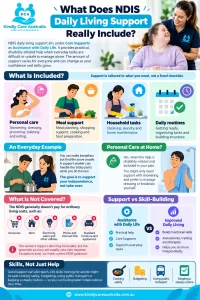
| Area of support | What it may include |
| Personal care | Showering, dressing, grooming, toileting and eating |
| Meal support | Meal planning, shopping support, cooking and food preparation |
| Household tasks | Cleaning, laundry and home maintenance |
| Daily routines | Getting ready, organising tasks and building structure |
Good daily living assistance is built around what you actually need, not a fixed checklist.
An Everyday Example
Say you can make breakfast but find the stove unsafe because of your disability. You don’t need every meal cooked for you. A support worker can handle the tricky parts while you do the rest. Another week, it might be folding laundry together until the routine clicks. The goal is never to take over tasks you can do.
Personal Care at Home?
Yes, when the help is disability-related and included in your plan. You might only need support with showering in the morning and prefer to manage dressing and breakfast yourself. Your support should reflect that, not automatically cover an entire routine.
What Is Not Covered?
The NDIS generally doesn’t pay for ordinary living costs just because they’re part of daily life. These usually include:
- Groceries
- Rent
- Electricity, water and other utilities
- Phone and internet bills
- Standard furniture and appliances
The simple rule: the worker’s support time may be funded, but the groceries you buy are normally your own expense. Exceptions exist for eligible disability-specific supports, so check current NDIS guidance first.
Support vs Skill-Building: Know The Difference
Assistance with Daily Life is practical Core help. Improved Daily Living is a separate category focused on building functional skills through eligible assessments, training and therapies. Funding for capacity building supports may suit someone who wants an occupational therapist to assess their abilities and suggest strategies for doing more independently. Searching for development daily living & life skills in Melbourne programs? This is the category to explore.
Skills, Not Just Help
Good support can gradually teach as well as assist. Life skills training for adults might cover cooking safely, budgeting, using public transport or keeping a steady routine. Over time, building independent living skills means the worker steps back as your confidence grows.
Does Your Plan Cover It?
Start with your plan’s support categories. Then ask yourself:
- Is the support linked to my disability?
- Does it fit my plan and funding?
- Will it help me stay safe or more independent?
If you’re unsure, check with your NDIS contact, support coordinator or plan manager before spending. There’s no single hourly rate either. Prices depend on the support item, the time of day and the current NDIS Pricing Arrangements, so always check your service agreement.
Choosing The Right Provider
When comparing NDIS daily living support Melbourne, look beyond the service list. Ask whether you can choose your tasks and your support worker, whether support can change as your needs change, and how your plan will be charged. Also ask about daily living skills training that Melbourne providers can deliver alongside hands-on help. The best providers fit around your life, not the other way round.
Final Remarks
NDIS daily living support is about practical help that keeps you in control, not doing everything for you. Know what’s funded, separate support costs from everyday expenses and choose a provider who listens. Kindly Care Australia Pty Ltd offers flexible, NDIS-registered help with personal care, household tasks and community participation, tailored to each participant’s goals. Reach out today to talk through your needs.
Get In Touch With Kindly Care Australia
Kindly Care Australia Pty Ltd is ready to help. Call 0477 120 854 or 0476 862 913, or email info@kindlycareaustralia.com.au to discuss personalised support for yourself or a loved one. We will gladly answer all of your questions without obligation.
Your Questions Answered
What Is NDIS Daily Living Support?
It is disability-related help with everyday tasks such as personal care, cooking, cleaning and laundry. It usually sits under Core Supports as Assistance with Daily Life.
Does the NDIS Pay for My Groceries?
Usually not. Groceries are treated as an ordinary living cost. The NDIS may fund a worker’s time helping you shop or prepare meals, but you normally pay for the food.
Can the NDIS Fund House Cleaning and Laundry?
Yes, when you need the help because of your disability, and it fits your plan. Household tasks like these are commonly part of Assistance with Daily Life.
What Is the Difference Between Assistance with Daily Life and Improved Daily Living?
Assistance with Daily Life is practical Core help from a support worker. Improved Daily Living is a Capacity Building category for eligible assessments, training and therapies that build skills and independence.
Do I Need Improved Daily Living Funding to Have a Support Worker?
Not necessarily. Practical everyday help from a support worker generally comes from Core funding, not Capacity Building.
Is There a Set Hourly Rate for Daily Living Support?
No. Prices vary with the support item, the time of day and the current NDIS Pricing Arrangements. Check your service agreement for the rate that applies to you.
Can My Daily Living Support Change Over Time?
Yes. Your needs, skills and goals can change, and your support can adjust with them, as long as it stays consistent with your plan and available funding.

