


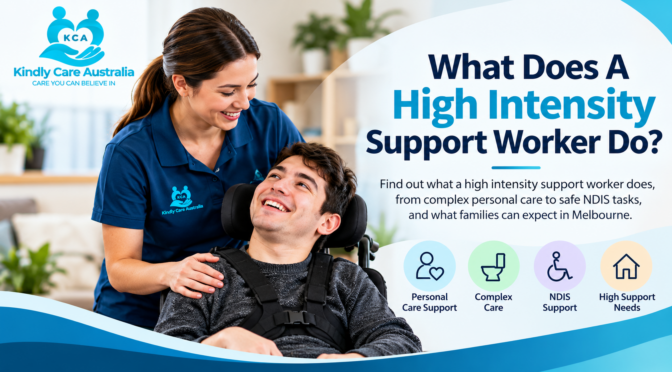
Imagine needing help with tube feeding, a catheter or a ventilator every single day. The support person beside you can not be just anyone. They need specialist skills, steady hands and real compassion. So, what does a high intensity support worker do? In short, they safely deliver higher-risk personal care while protecting your dignity and choices. Whether you are exploring NDIS high intensity personal activities Melbourne options for yourself or a loved one, this guide breaks the role down simply. Kindly Care Australia Pty Ltd supports families with trained, caring workers who understand NDIS high intensity personal activities inside out.
The Short Answer
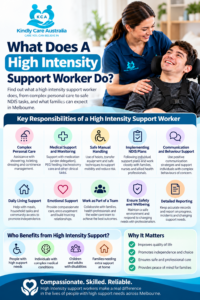
A high intensity support worker delivers specialised daily health-related personal care under clinical guidance. They follow each participant’s care plan, spot changes early and report them fast. Think of them as the trusted link between clinical advice and everyday life. It is never just a task list; it is a relationship built on trust. It is a core part of NDIS complex care services, where safety and dignity matter equally.
A Day In The Life
- Morning: Assistance with high intensity personal activities, like enteral feeding or complex bowel care, followed by a quick health check.
- Midday: Tracheostomy management as directed by clinicians, plus help with bathing, personal hygiene and getting in and out of bed.
- Afternoon: Social and community participation, such as outings, appointments or time in the park.
- Evening: Infection control, detailed notes and a calm handover.
- Anytime: Emergency response using the participant’s plan and first aid within training.
Every step is explained, respectful and led by the participant’s preferences, because dignity is never optional.
What Counts As “High Intensity”?
Under the NDIS Practice Standards, high intensity NDIS support includes complex bowel care, enteral feeding, dysphagia support, ventilator support, tracheostomy care, urinary catheter care, subcutaneous injections and complex wound care. Epilepsy and seizure support also has specific guidance. Providers may only deliver the supports listed on their registration. These often suit people with spinal cord injuries, MND, MS or respiratory needs.
Myth vs Reality: Where The Role Stops
Myth: Experienced workers can adjust treatment.
Reality: They never diagnose, change treatment plans or give unauthorised medication.
Myth: They handle everything alone.
Reality: Nurses and allied health professionals guide the clinical side, and workers ask when unsure.
Myth: Any carer can provide high needs personal care Melbourne families need.
Reality: Only workers trained and signed off for each task should perform it.
Skills And Training: The Non-Negotiables
Workers must prove competence in every task they perform. The NDIS Commission’s High Intensity Support Skills Descriptors, revised in February 2023, outline the expected skills. Providers must also hold the right registration and follow participant-specific plans with clinical oversight. Ongoing supervision and refresher training keep those skills current. Combine that with calm communication and strong observation, and you get high support personal care that feels safe and unhurried.
Risks They Watch Every Day
Small oversights can become serious quickly, so workers run a quick risk check before every task. They watch closely for:
- Aspiration during feeding or oral care
- Pressure injuries from long periods in one position
- Infections linked to wounds or catheters
- Seizure-related injuries
Anything unusual is recorded and reported immediately, even near misses, so the team can learn and prevent repeats.
Who Works Alongside Them?
Registered nurses, GPs and allied health professionals provide direction, while support workers deliver daily tasks after task-specific training and assessment. This teamwork underpins high intensity disability support Melbourne, with clear reporting and regular updates to everyone involved.
5 Questions To Ask Before Choosing A Provider
- Is your registration current for my exact supports?
- How are workers trained, assessed and supervised?
- What is your emergency and incident process?
- Can you provide consistent staff and flexible rosters?
- How will you keep families updated?
The right answers show a team committed to personal care for high support needs, guided by your NDIS plan and reviewed regularly.
Final Remarks
A high intensity support worker blends technical skill, sound judgement and genuine compassion to make complex daily care safer and more dignified. With the right training, clear care plans and clinical oversight, participants can live confidently at home. Kindly Care Australia Pty Ltd is committed to reliable NDIS high intensity personal activities support, backed by trained workers, open communication and respect for every participant’s goals. Reach out today to discuss your needs.
Let’s Talk About Your Support Needs
Kindly Care Australia Pty Ltd is ready to help. Call 0477 120 854 or 0476 862 913, or email info@kindlycareaustralia.com.au to discuss personalised support for yourself or a loved one. We will gladly answer all of your questions without obligation.
Your Questions Answered
What Is High Intensity Support Under The NDIS?
It covers daily personal activities that carry higher health risks, such as complex bowel care, enteral feeding and tracheostomy care. These tasks need specific training and clinical oversight.
What Does A High Intensity Support Worker Do?
They carry out specialised personal care as set out in the participant’s care plan. They also monitor health changes, keep accurate records and report concerns promptly.
Can A Support Worker Change A Participant’s Treatment Or Medication?
No. Support workers cannot diagnose, alter treatment plans or give unauthorised medication. Clinical decisions stay with nurses, doctors and allied health professionals.
What Training Do High Intensity Support Workers Need?
They must be competent in each specific task they perform. The NDIS Commission’s High Intensity Support Skills Descriptors set the expected skills and knowledge.
Who Is Eligible For High Intensity Support?
Participants with complex or chronic health needs identified in their NDIS plan may be eligible. Examples include spinal cord injuries, motor neurone disease, multiple sclerosis, epilepsy and respiratory needs.
Do High Intensity Supports Involve A Nurse?
Often, yes. Registered nurses and other health professionals provide clinical direction, while trained support workers deliver day-to-day tasks under that guidance.
What Risks Do Support Workers Watch For?
They watch for aspiration, pressure injuries, infections and seizure-related injuries. Anything unusual is recorded and reported straight away, including near misses.

